Cooking Tips and Tricks: Simple Ways to Make Every Meal Better
Cooking tips and tricks at home has become more popular across the United States. Whether you’re preparing a quick weekday dinner or hosting a weekend family meal, knowing a few practical cooking tips and tricks can make the process easier, faster, and more enjoyable.
The good news is that you don’t need to be a professional chef to cook delicious food. Small improvements in preparation, seasoning, and timing can have a big impact on the final result. This guide shares useful cooking tips that beginners and experienced home cooks can use every day.
Cooking Tips and Tricks Why Skills Matter
Learning basic cooking tips and tricks techniques offers several benefits:
- Saves money compared to eating out
- Gives you control over ingredients
- Helps create healthier meals
- Reduces food waste
- Makes cooking less stressful
- Builds confidence in the kitchen
Many American families are choosing homemade meals because they are budget-friendly and can be customized for different dietary needs.
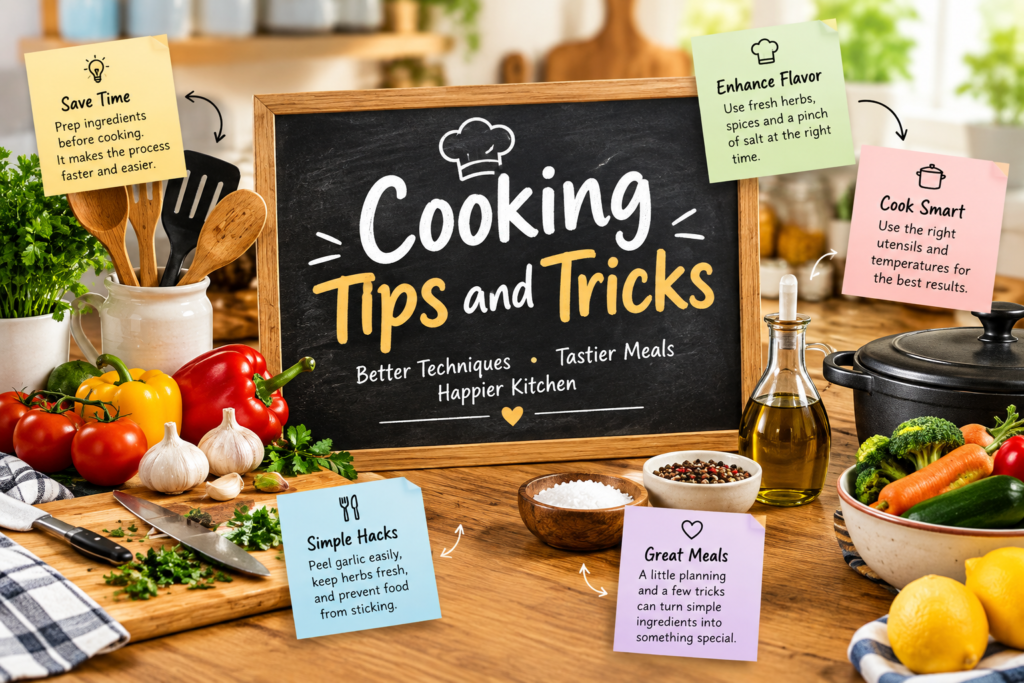
Essential Kitchen Tools Every Home Cooking Tips and Tricks Needs
Before learning cooking tips and tricks, make sure your kitchen has the basics.
| Kitchen Tool | Why It’s Useful |
| Chef’s knife | Faster and safer chopping |
| Cutting board | Protects countertops and keeps food clean |
| Measuring cups and spoons | Accurate recipes |
| Nonstick skillet | Great for eggs and pancakes |
| Baking sheet | Perfect for roasting vegetables and baking |
| Mixing bowls | Useful for meal prep |
| Food thermometer | Ensures meat is cooked safely |
| Silicone spatula | Easy stirring and scraping |
Quality tools don’t have to be expensive. A few reliable essentials can handle most everyday recipes.
Read the Recipe Before You Start Cooking Tips and Tricks
One of the biggest mistakes beginners make is jumping into a recipe without reading it first.
Reading the instructions ahead of time helps you:
- Prepare ingredients in advance
- Understand cooking times
- Avoid missing important steps
- Stay organized throughout the process
Professional chefs call this preparation mise en place, which simply means having everything ready before cooking begins.
Keep Your Knives Sharp
A sharp knife is actually safer than a dull one because it cuts cleanly without slipping.
Tips:
- Sharpen knives regularly.
- Wash and dry them by hand.
- Store them safely in a knife block or magnetic strip.
- Always cut on a wooden or plastic cutting board.
Season Food in Layers
Instead of adding all the seasoning at the end, season food throughout the cooking tips and tricks.
For example:
- Salt vegetables before roasting.
- Add herbs while sauces simmer.
- Taste soups before serving.
- Finish grilled meat with a small pinch of flaky salt.
Layered seasoning creates deeper, richer flavors.
Don’t Overcrowd the Pan
When too much food is placed in one pan, ingredients steam instead of brown.
Better Method
✔ Cook in smaller batches.
This creates:
- Better color
- Crispier texture
- Richer flavor
This trick works especially well for chicken, steak, mushrooms, and roasted vegetables.
Let Meat Rest Before Slicing
After cooking meat, let it rest for several minutes.
| Meat | Resting Time |
| Chicken | 5–10 minutes |
| Steak | 5–10 minutes |
| Turkey | 20–30 minutes |
| Pork chops | 5 minutes |
Resting allows juices to redistribute, making the meat more tender and flavorful.
Taste While You Cook
Don’t wait until dinner is served to discover something is missing.
Taste dishes throughout cooking and adjust:
- Salt
- Pepper
- Lemon juice
- Herbs
- Garlic
- Spices
Small adjustments can completely change a recipe.
Learn Proper Food Storage
Proper storage keeps food fresh longer.
Refrigerator Tips
- Store leftovers within two hours.
- Use airtight containers.
- Label containers with dates.
- Keep raw meat on the lowest shelf.
Pantry Tips
Store:
- Rice
- Pasta
- Flour
- Sugar
- Spices
in cool, dry places away from sunlight.
Use Fresh Herbs the Right Way
Fresh herbs add color and flavor.
Add Early
- Rosemary
- Thyme
- Bay leaves
These herbs hold up well during long cooking.
Add Near the End
- Basil
- Parsley
- Cilantro
- Dill
Adding delicate herbs at the end preserves their fresh taste.
Preheat Your Pan
Many people place food into a cold pan.
Instead:
- Heat the pan first.
- Add oil.
- Wait until the oil shimmers.
- Add the food.
This creates better browning and prevents sticking.
Don’t Skip the Food Thermometer
Guessing when meat is done can lead to undercooked or overcooked meals.
Recommended Safe Internal Temperatures
| Food | Temperature |
| Chicken | 165°F |
| Ground beef | 160°F |
| Pork | 145°F |
| Fish | 145°F |
A digital food thermometer is inexpensive and improves both safety and consistency.
Save Time with Meal Prep
Meal preparation makes busy weekdays much easier.
Ideas include:
- Chop vegetables on Sunday.
- Cook rice in advance.
- Grill several chicken breasts.
- Portion snacks into containers.
- Freeze soups and sauces.
Even one hour of prep can save several hours during the week.
Reduce Food Waste
Every kitchen throws away food occasionally, but a few habits can reduce waste.
Examples:
- Freeze ripe bananas for smoothies.
- Use vegetable scraps to make broth.
- Turn stale bread into homemade croutons.
- Blend leftover herbs into pesto.
- Use roasted chicken leftovers for tacos, sandwiches, or soup.
These simple habits save money and make the most of your groceries.
Common Cooking Mistakes and Better Alternatives
| Common Mistake | Better Approach |
| Overcooking vegetables | Cook until just tender |
| Guessing measurements | Use measuring tools |
| Cooking on high heat all the time | Adjust heat based on the recipe |
| Skipping preheating | Always preheat pans and ovens |
| Flipping food too often | Let food develop a crust first |
| Forgetting to taste | Taste and adjust seasoning as you cook |
Smart Cooking Tips and Tricks for Healthier Meals
Healthy cooking tips and tricks doesn’t have to mean sacrificing flavor.
Try these ideas:
- Roast instead of deep-frying.
- Use olive or avocado oil in moderation.
- Replace heavy cream with plain Greek yogurt in some recipes.
- Add extra vegetables to pasta, soups, and casseroles.
- Choose whole grains when possible.
- Limit added sugar in homemade sauces and dressings.
These small swaps can improve nutrition while keeping meals satisfying.
Cooking Tips and Tricks for Busy Families
If your schedule is packed, these shortcuts can help:
- Plan weekly meals before grocery shopping.
- Keep frozen vegetables on hand.
- Cook double batches and freeze extras.
- Use slow cookers or pressure cookers for hands-off meals.
- Clean as you cook to avoid a pile of dishes.
A little planning can make home cooking much less stressful.
Final Thoughts
Great cooking tips and tricks isn’t about fancy equipment or complicated recipes. It’s about mastering simple techniques, staying organized, and paying attention to the details. From seasoning food in layers to letting meat rest and preparing ingredients ahead of time, these everyday cooking tips and tricks can help you create meals that are flavorful, satisfying, and consistent.
Whether you’re making classic American comfort food, healthy family dinners, or quick weeknight meals, practicing these habits will improve your confidence in the kitchen. The more you cook, the more natural these techniques become, turning everyday recipes into meals everyone looks forward to sharing.