Small Business Tax Deductions: A Complete Guide to Lowering Your Tax Bill
Running a small business tax deductions comes with many responsibilities, and paying taxes is one of the biggest. While taxes are unavoidable, paying more than necessary isn’t. Understanding small business tax deductions can help you reduce your taxable income, improve cash flow, and keep more money in your business.
Many business owners miss valuable deductions simply because they don’t know what qualifies as a business expense. Whether you’re a freelancer, startup founder, contractor, or small business owner, knowing what you can legally deduct is essential for smart financial management.
In this guide, you’ll learn the most common small business tax deductions, how they work, and practical tips to stay compliant while maximizing your savings.
What Are Small Business Tax Deductions?
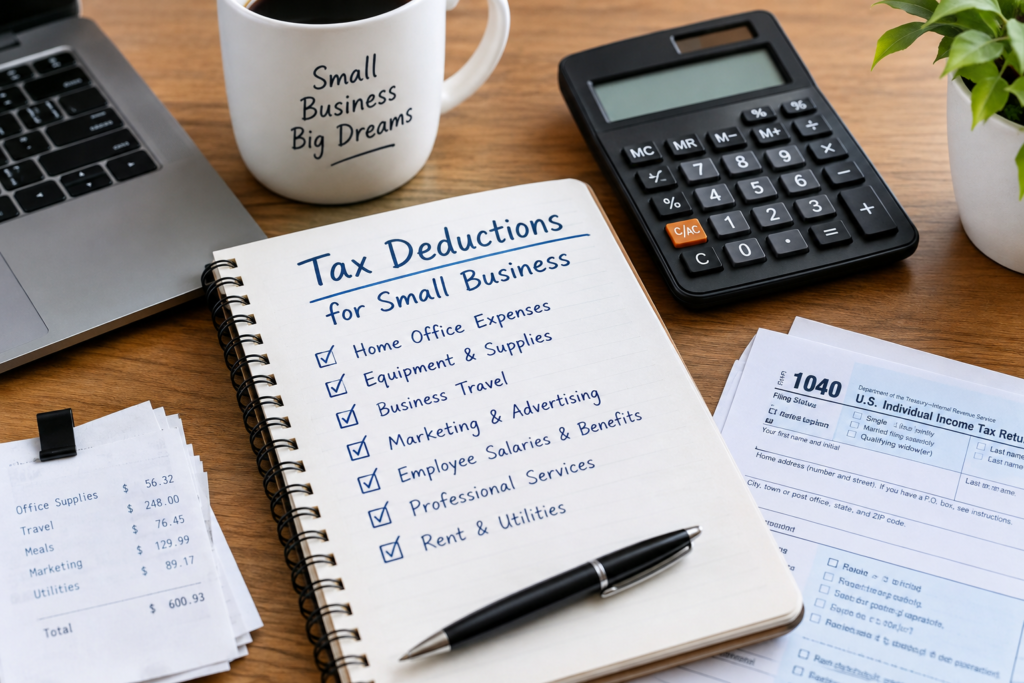
A small business tax deductions is a business expense that the government allows you to subtract from your taxable income. The lower your taxable income, the less tax you may owe.
To qualify, an expense must generally be ordinary and necessary for operating your business. This means the expense should be common within your industry and directly related to running your business.
Keeping accurate records throughout the year makes it much easier to claim these deductions when tax season arrives.
Why Tax Deductions Matter
Tax deductions do more than reduce your tax bill. They also improve your company’s financial health by freeing up cash that can be invested in marketing, equipment, hiring employees, or expanding operations.
Benefits of claiming legitimate deductions include:
Lower taxable income
Improved cash flow
Better financial planning
Increased profitability
Reduced risk of overpaying taxes
Ignoring eligible deductions could mean leaving hundreds or even thousands of dollars on the table each year.
Common Small Business Tax Deductions
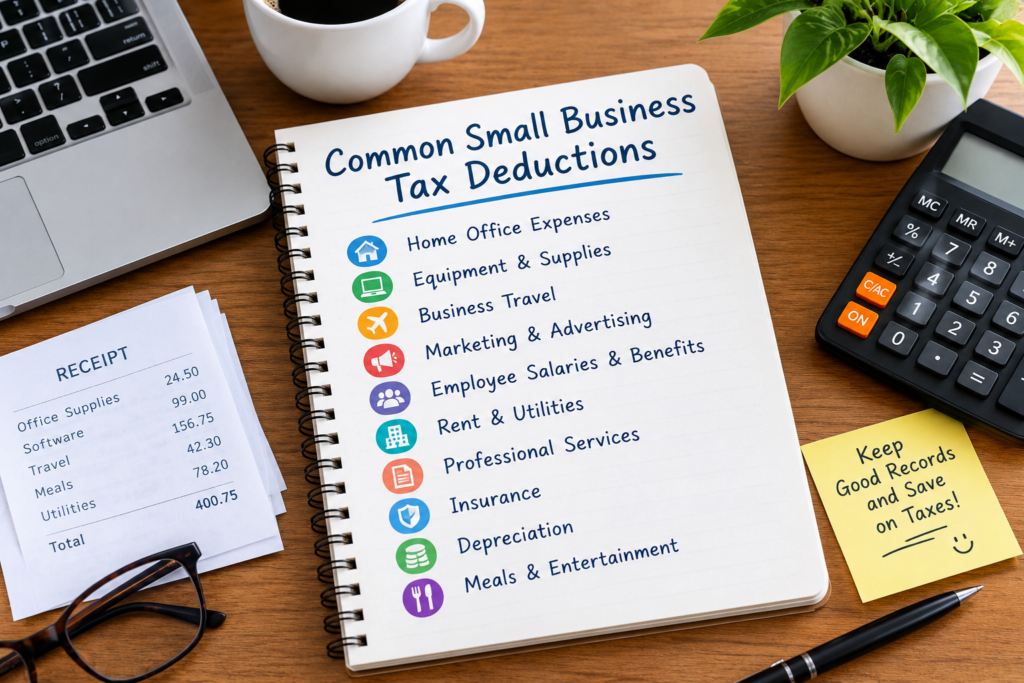
1. Home Office Expenses
If you operate your small business tax deductions from home, you may qualify for a home office deduction.
The workspace must be used regularly and exclusively for business purposes. Depending on your situation, you may be able to deduct a portion of:
Rent or mortgage interest
Property taxes
Utilities
Internet service
Home insurance
Maintenance costs
The deductible amount typically depends on the percentage of your home used for business.
2. Office Supplies and Equipment
Everyday business supplies are generally deductible. These include items purchased to keep your business running efficiently.
Examples include:
Pens and notebooks
Printer paper
Ink cartridges
Computers
Monitors
Office furniture
Business software
External storage devices
Larger purchases may need to be depreciated over several years, depending on local tax rules.
3. Business Vehicle Expenses
If you use a vehicle for business purposes, certain transportation costs may qualify as deductions.
Eligible expenses often include:
Fuel
Repairs
Maintenance
Insurance
Registration fees
Parking charges
Business-related mileage
Keep a detailed mileage log to separate personal travel from business use.
4. Employee Salaries and Benefits
Compensation paid to employees is generally deductible.
This may include:
Wages
Bonuses
Health insurance contributions
Retirement plan contributions
Paid leave
Payroll taxes
Providing competitive benefits can help attract skilled employees while also offering valuable tax advantages.
5. Business Travel
Travel expenses related to business activities are commonly deductible.
Examples include:
Airfare
Hotel accommodations
Taxi or rideshare services
Rental vehicles
Conference registration fees
Meals during business travel (subject to applicable rules)
The trip must primarily serve a legitimate business purpose.
6. Marketing and Advertising
Promoting your business is an investment that often qualifies as a deductible expense.
Common marketing deductions include:
Website development
Search engine optimization (SEO)
Social media advertising
Business cards
Email marketing
Online advertisements
Printed brochures
Promotional materials
Keeping invoices and advertising contracts helps support your claims.
7. Professional Services
Fees paid to professionals are generally deductible if they directly support your business operations.
These services may include:
Accountants
Lawyers
Business consultants
Financial advisors
Bookkeepers
Tax preparation professionals
Professional advice can also help identify additional deductions you might otherwise overlook.
8. Business Insurance
Insurance protects your business from unexpected financial losses, and many insurance premiums qualify as deductible expenses.
Examples include:
General liability insurance
Professional liability insurance
Commercial property insurance
Workers’ compensation insurance
Cybersecurity insurance
Insurance not only provides protection but also offers potential tax savings.
9. Education and Training
Investing in professional development can improve your business while reducing taxable income.
Deductible educational expenses may include:
Online courses
Industry certifications
Workshops
Business seminars
Professional memberships
Training materials
The education should directly relate to maintaining or improving your current business skills.
10. Utilities and Communication
Essential operating expenses such as communication and utility services are often deductible.
These expenses may include:
Business phone service
Internet bills
Electricity
Water
Cloud storage subscriptions
Video conferencing software
If you use these services for both personal and business purposes, only the business portion is typically deductible.
How to Keep Proper Records
Good recordkeeping is one of the most important parts of claiming tax deductions.
Maintain organized documentation, including:
Receipts
Invoices
Bank statements
Credit card statements
Payroll records
Mileage logs
Expense reports
Using accounting software can simplify expense tracking throughout the year and reduce errors during tax filing.
Common Mistakes to Avoid
Many small business tax deductions owners unintentionally increase their tax bill by making avoidable mistakes.
Some of the most common include:
Mixing personal and business expenses
Failing to save receipts
Claiming expenses without proper documentation
Forgetting smaller recurring deductions
Waiting until tax season to organize records
Not consulting a qualified tax professional when needed
Staying organized year-round can help prevent these issues.
Tips to Maximize Your Tax Deductions
A proactive approach can help you make the most of available deductions.
Here are a few practical strategies:
Open a dedicated business bank account.
Use accounting software to categorize expenses.
Review expenses monthly instead of annually.
Keep digital copies of important receipts.
Track mileage consistently.
Plan major purchases before the end of the tax year when appropriate.
Work with a qualified tax advisor to ensure compliance with current tax regulations.
These habits can save both time and money while reducing the risk of costly mistakes.
Final Thoughts
Keep accurate records of Small Business Tax Deductions, save receipts, and track eligible expenses throughout the year.
Review Small Business Tax Deductions carefully and consult a tax professional to maximize savings and avoid costly mistakes.
Small business tax deductions are one of the most effective ways to reduce operating costs and improve your bottom line. From home office expenses and marketing costs to employee salaries and professional services, many everyday business expenses may qualify for valuable tax.