Sports Nutrition: The Complete Guide to Fueling Performance and Recovery
Whether you’re a professional athlete, a weekend runner, or someone who enjoys regular workouts, what you eat has a direct impact on your performance. Training alone isn’t enough—your body also needs the right nutrients to build strength, maintain energy, and recover efficiently. That’s where sports nutrition plays a vital role.
A balanced nutrition plan helps improve endurance, supports muscle growth, reduces fatigue, and keeps your body ready for every training session. This guide explains the fundamentals of sports nutrition in a simple and practical way, helping you make smarter food choices for better results.
What Is Sports Nutrition?
Sports nutrition is the practice of eating and drinking in a way that supports physical activity, athletic performance, and recovery. It focuses on providing the body with the nutrients needed before, during, and after exercise.
Unlike restrictive diets, sports nutrition is about fueling your body with the right balance of carbohydrates, proteins, healthy fats, vitamins, minerals, and fluids based on your activity level.
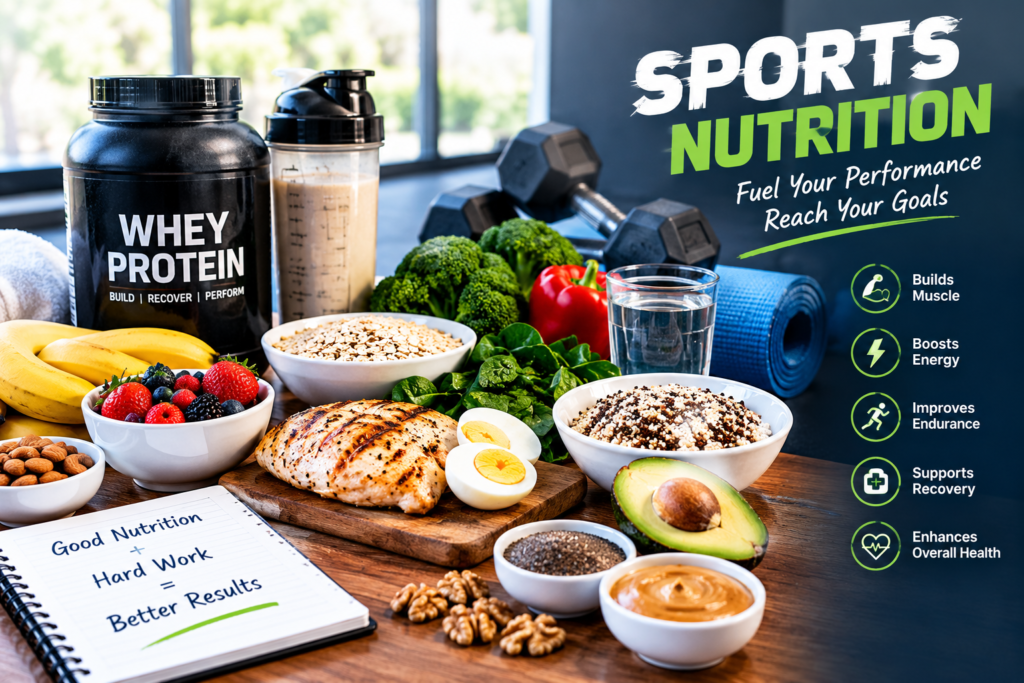
Why Sports Nutrition Matters
Good nutrition does much more than satisfy hunger. It prepares your body to perform at its best and recover faster after exercise.
Some of the key benefits include:
Improved energy levels during workouts
Faster muscle recovery
Better endurance and stamina
Increased strength and lean muscle development
Reduced risk of injury
Improved concentration and mental focus
Stronger immune system
Better overall health and fitness
Even small improvements in your daily eating habits can make a noticeable difference in athletic performance.
The Essential Nutrients Every Athlete Needs
Carbohydrates: Your Main Energy Source
Carbohydrates provide the fuel your muscles use during exercise. They are especially important for endurance sports and high-intensity training.
Healthy carbohydrate sources include:
Oatmeal
Brown rice
Whole-grain bread
Sweet potatoes
Fruits
Vegetables
Whole-grain pasta
Choosing complex carbohydrates helps maintain steady energy throughout the day.
Protein: Building and Repairing Muscles
Protein supports Sports Nutrition muscle recovery and growth after physical activity. Consuming enough protein helps repair muscle tissue and promotes strength development.
Excellent protein sources include:
Chicken
Turkey
Fish
Eggs
Greek yogurt
Cottage cheese
Lentils
Beans
Tofu
Nuts and seeds
Try to include a quality protein source with every main meal.
Healthy Fats: Long-Lasting Energy
Healthy fats support hormone production, brain function, and overall health while providing sustained energy.
Nutritious fat sources include:
Avocados
Olive oil
Almonds
Walnuts
Chia seeds
Flaxseeds
Salmon
Balance is important, as fats are calorie-dense but essential for optimal health.
Hydration Is Just as Important as Food
Water plays a critical role in sports performance. Even mild dehydration can reduce endurance, slow reaction time, and increase fatigue.
Stay hydrated by:
Drinking water throughout the day
Hydrating before exercise
Replacing fluids lost during workouts
Drinking water after physical activity
For long or intense training sessions lasting over an hour, sports drinks with electrolytes may help replace sodium and other minerals lost through sweat.
What to Eat Before a Workout
Eating before exercise provides your body with the energy needed for optimal performance.
Aim to eat a balanced meal two to three hours before training. Include carbohydrates for energy and moderate protein for muscle support.
Good pre-workout meal ideas include:
Oatmeal with banana
Whole-grain toast with peanut butter
Grilled chicken with brown rice
Greek yogurt with berries
Turkey sandwich on whole-grain bread
Avoid heavy, greasy meals immediately before exercise.
Nutrition During Exercise
For workouts lasting less than an hour, water is usually sufficient.
During longer endurance activities such as marathon running or cycling, easily digestible carbohydrates help maintain energy.
Examples include:
Bananas
Energy gels
Sports drinks
Dried fruit
Energy chews
The goal is to prevent energy depletion without causing stomach discomfort.
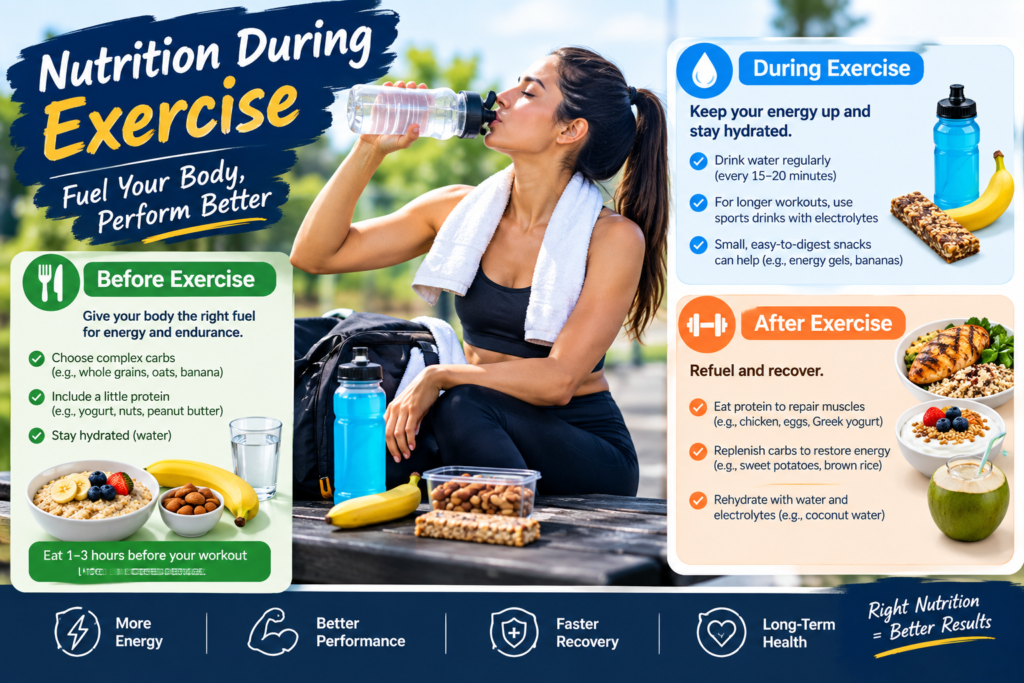
The Importance of Post-Workout Nutrition
Recovery begins as soon as your workout ends.
A combination of carbohydrates and protein within one hour after exercise helps replenish energy stores and repair muscles.
Healthy recovery meals include:
Grilled chicken with quinoa
Protein smoothie with fruit
Tuna sandwich
Cottage cheese with berries
Eggs with whole-grain toast
Proper recovery nutrition helps reduce muscle soreness and prepares your body for the next workout.
Vitamins and Minerals for Active People
Micronutrients play an important role in overall athletic performance.
Key nutrients include:
Calcium for strong bones
Iron for oxygen transport
Vitamin D for bone and muscle health
Magnesium for muscle function
Potassium for fluid balance
Zinc for recovery and immune support
A varied, balanced diet usually provides these nutrients without the need for unnecessary supplementation.
Healthy Snacks for Athletes
Nutritious snacks help maintain energy between meals.
Good options include:
Mixed nuts
Fresh fruit
Greek yogurt
Protein smoothies
Rice cakes with peanut butter
Hummus with vegetables
Cottage cheese
Trail mix
Choose snacks that combine carbohydrates with protein whenever possible.
Common Sports Nutrition Mistakes
Many active people unknowingly limit their performance through poor eating habits.
Avoid these common mistakes:
Skipping breakfast
Not drinking enough water
Eating too little protein
Relying heavily on processed foods
Ignoring recovery meals
Consuming excessive sugar
Trying restrictive fad diets
Overusing supplements without professional guidance
Consistency is more effective than chasing quick fixes.
Do You Need Sports Supplements?
Supplements can be helpful in certain situations, but they should never replace a balanced diet.
Most recreational athletes can meet their nutritional needs through whole foods. If you are considering protein powders, creatine, electrolyte drinks, or other supplements, choose reputable products and consult a qualified healthcare professional or registered dietitian if you have specific health concerns or performance goals.
Sports Nutrition Tips for Beginners
If you’re just starting your fitness journey, focus on building sustainable habits.
Eat balanced meals every day.
Stay hydrated.
Include protein with each meal.
Choose whole foods whenever possible.
Eat enough carbohydrates to fuel workouts.
Prioritize post-workout recovery.
Get enough sleep.
Adjust your food intake as your activity level changes.
Simple, consistent habits often deliver better long-term results than overly complicated meal plans.
Final Thoughts
Sports nutrition is one of the most valuable tools for improving athletic performance, recovery, and overall health. The right combination of nutritious foods, adequate hydration, and consistent eating habits can help you train harder, recover faster, and reach your fitness goals more effectively.
You don’t need a perfect diet to see results. Start by making small improvements—such as eating more whole foods, drinking enough water.